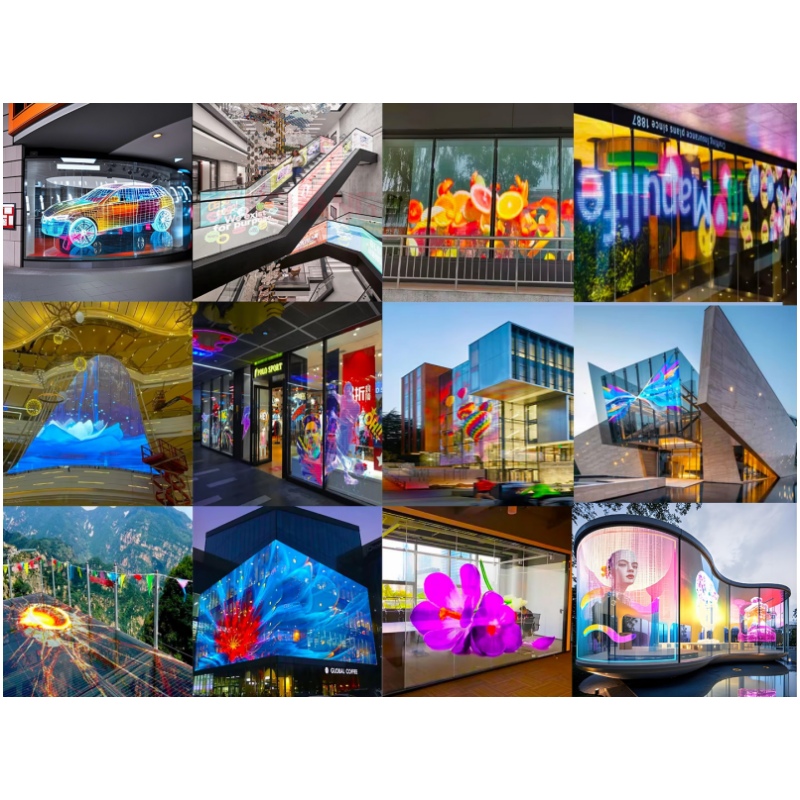
Q1: Can the transparent LED film be cut or trimmed on-site to fit custom glass sizes?
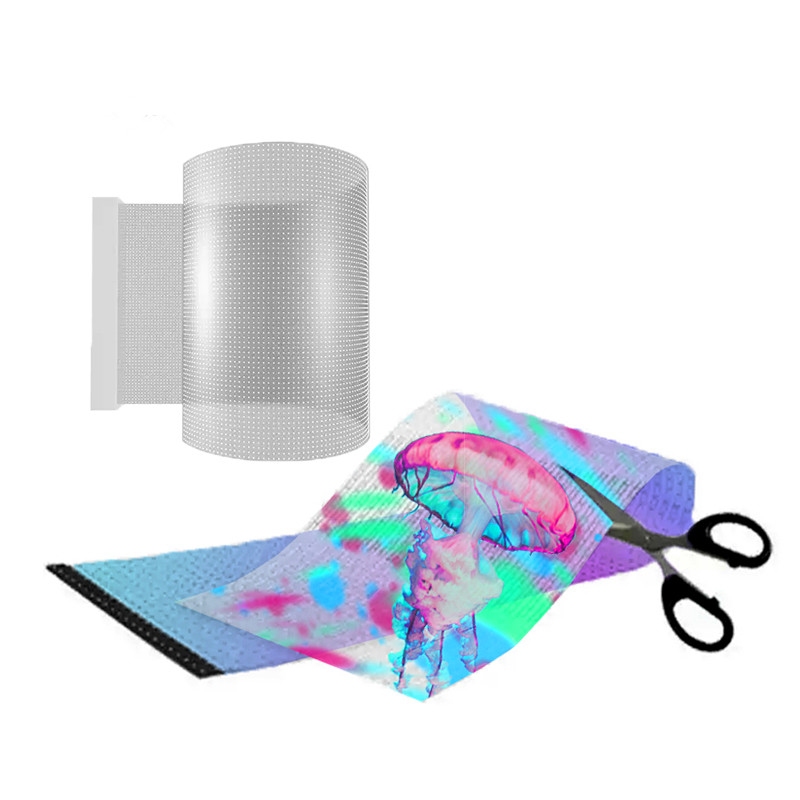
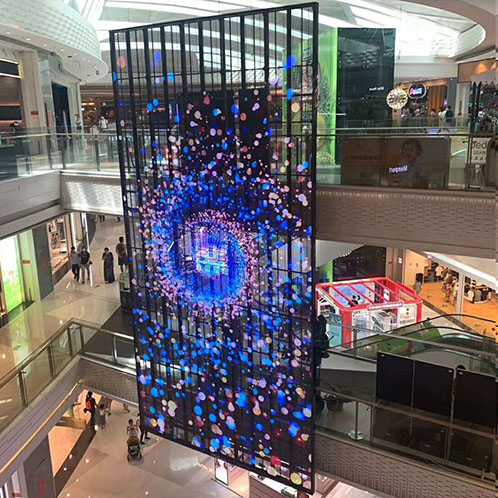
While the film contains embedded circuitry and cannot be cut arbitrarily across active pixels, our factory provides custom-sized modules and grid alignments. Installers can seamlessly splice multiple films together to cover large or irregular glass dimensions.
Q2: Does the film block natural sunlight or view from inside the building?
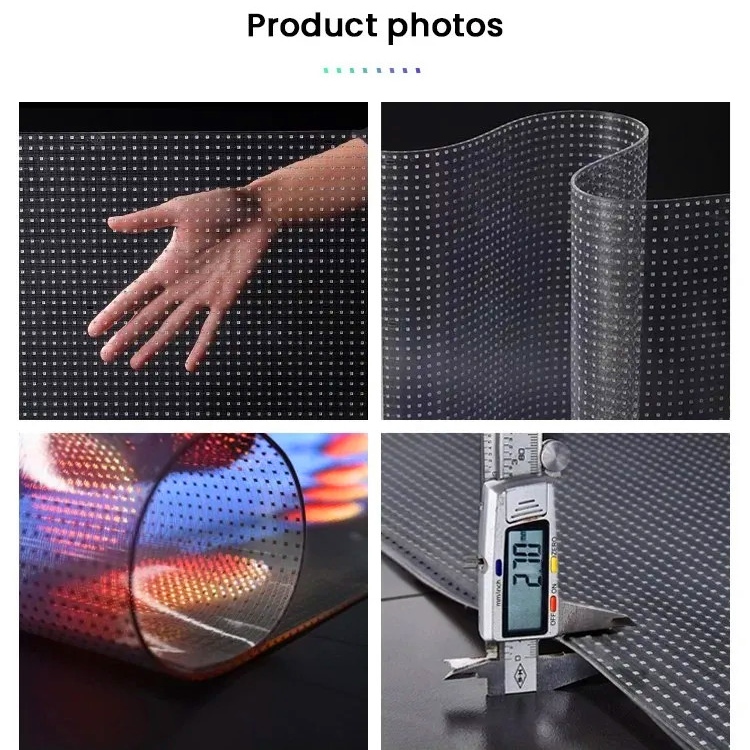
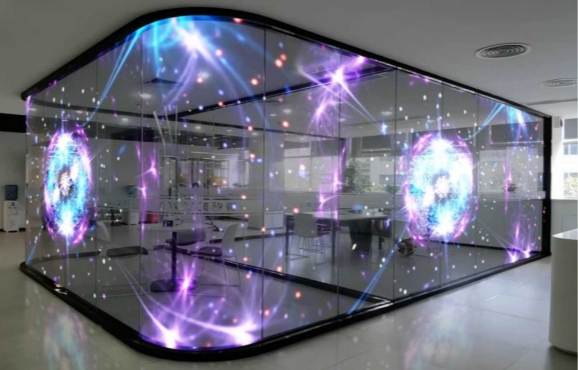
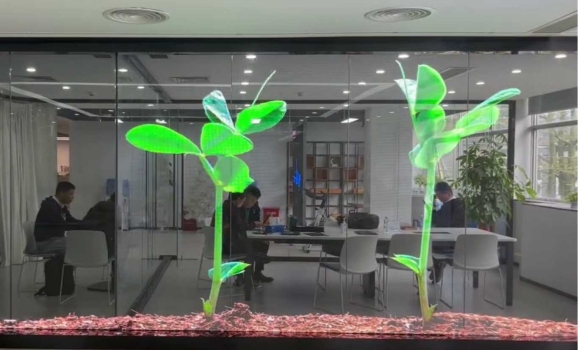
No. With a transparency rate ranging from 70% to 90%, people inside the building can look out clearly, and natural daylight passes through unhindered, meeting architectural lighting codes.
Q3: How is the film powered and controlled?
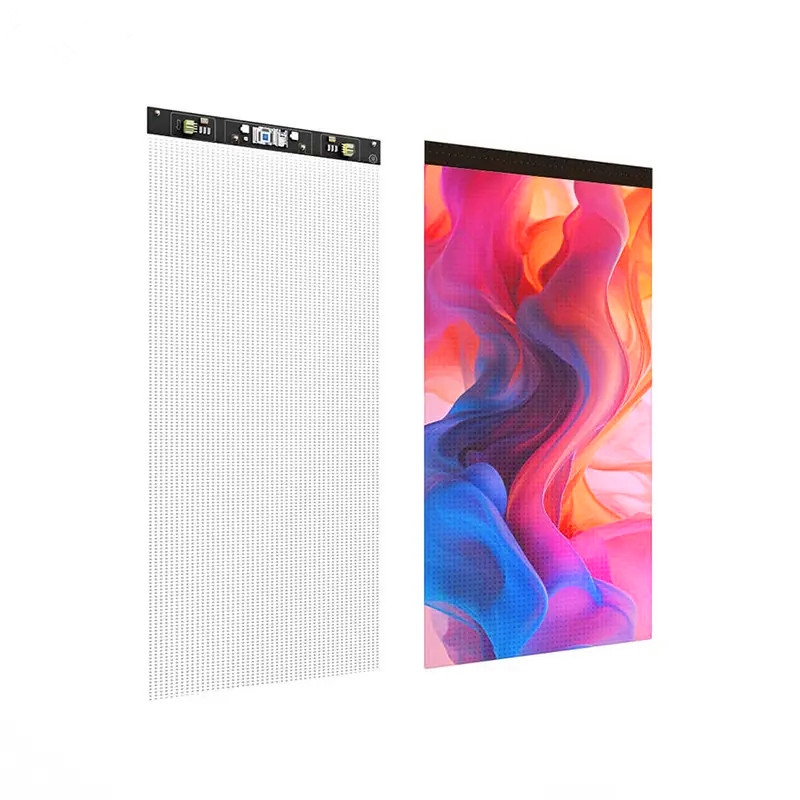
The ultra-thin power and signal driver boxes are neatly hidden along the edge of the glass frame (top, bottom, or sides). It supports standard synchronous control systems (Novastar, Colorlight) via HDMI/DVI inputs, as well as wireless WiFi, USB, and cloud-based remote management.
Q4: Can the screen achieve high brightness if installed behind storefront glass facing direct sunlight?
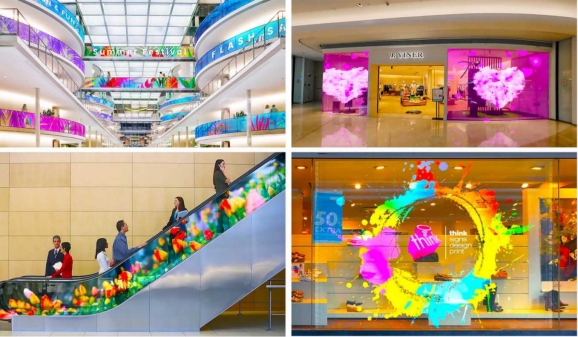
Yes. Our high-brightness models deliver 4500 to 5500 nits of luminance. Even when applied behind single or double-glazed storefront glass exposed to glaring afternoon sunlight, the promotional content remains crisp, vibrant, and easily readable by pedestrians outside.
Q5: How is the transparent LED film installed onto glass? Does it require heavy framing?
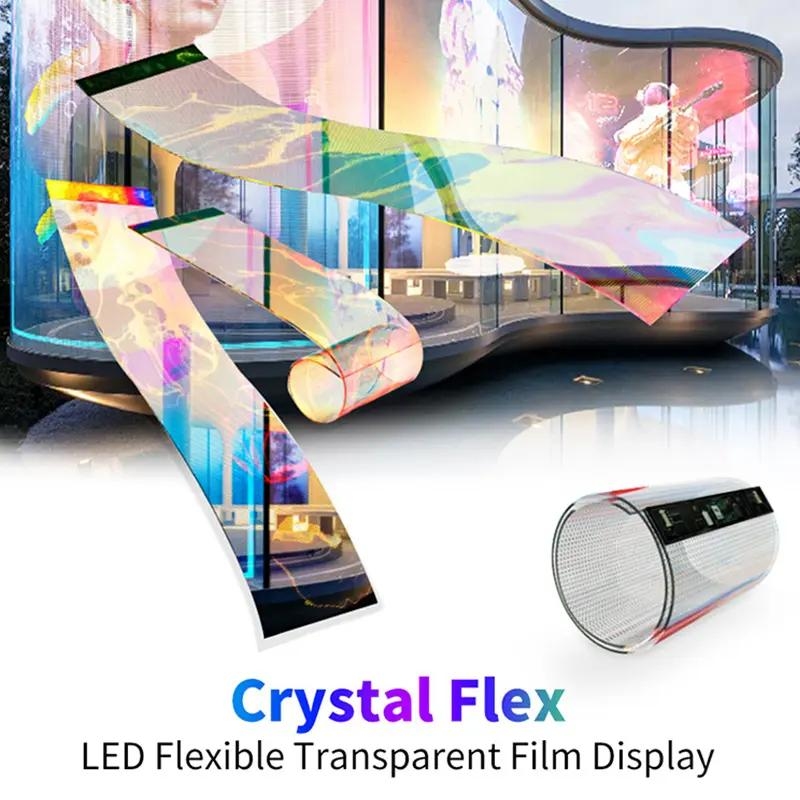
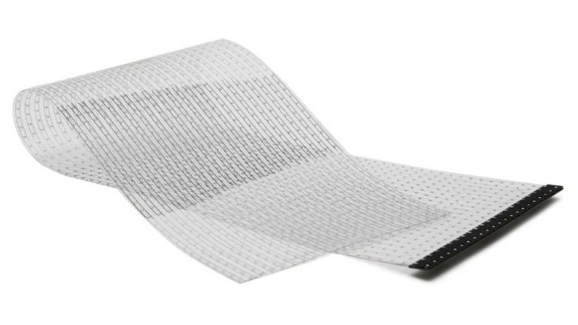
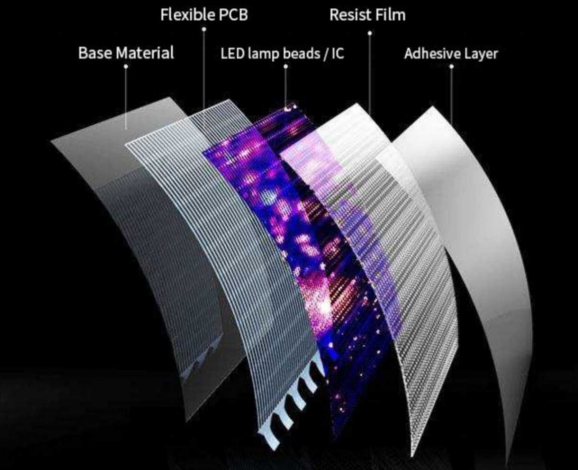
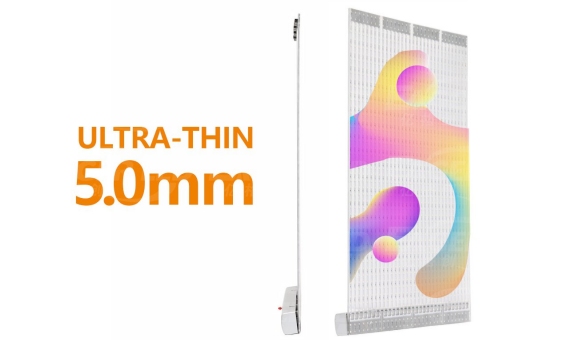
No heavy steel framing or complex structural reinforcement is needed. The film weighs only 2 to 4 kg/m² and is less than 2mm thick. It uses a peel-and-stick application method with high-durability optical clear adhesive (OCA) that attaches directly to clean glass surfaces.
Q6: Can the film be installed on curved glass, arc windows, or cylindrical pillars?
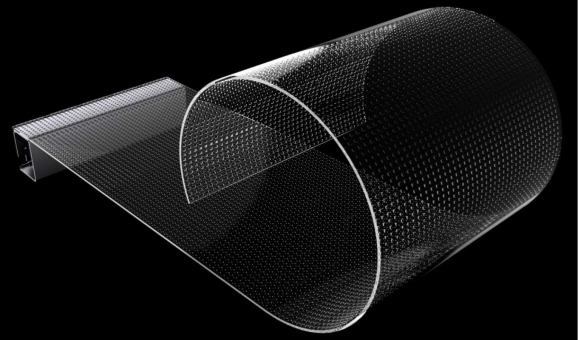
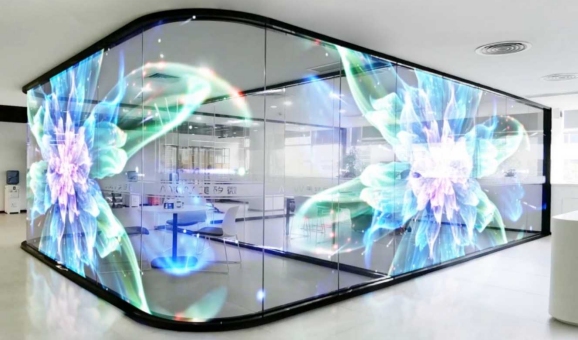
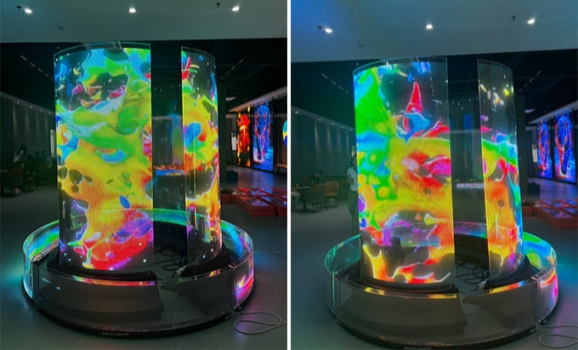
Absolutely. Built on a flexible, high-temperature-resistant optical PC/PET substrate, the film possesses high mechanical flexibility. It can safely bend and conform to curved glass, cylindrical elevator shafts, and complex architectural arcs without damaging internal circuits.
Q7: Where are the power supplies and control boxes placed so they don't ruin the glass aesthetic?
To maintain maximum transparency, the ultra-slim power supply units (PSUs) and control receiver cards are typically housed in low-profile aluminum framing hidden along the top, bottom, or side edges of the glass window frame.
Q8: What control systems are compatible with the transparent LED film?
The system is fully compatible with mainstream synchronous control hardware, including Novastar controllers. It supports standard HDMI/DVI video inputs, as well as wireless WiFi, 4G LTE modules, and cloud-based CMS platforms for remote multi-screen management.
Q9: What happens if a single LED pixel or strip stops working? Is maintenance difficult?
Maintenance is extremely user-friendly. The film features a modular strip design. If an individual light strip experiences issues, technicians can replace that specific component locally via front-service methods without tearing down the entire screen or peeling off the healthy sections of the film.
Q10: What is the operational lifespan of the transparent LED film, and how does it handle temperature changes?
The film is engineered for heavy-duty commercial use with an operational lifespan of $\ge 100,000$ hours. Constructed with anti-UV, flame-retardant optical materials, it withstands indoor thermal expansion and prolonged sun exposure without yellowing, peeling, or degrading.