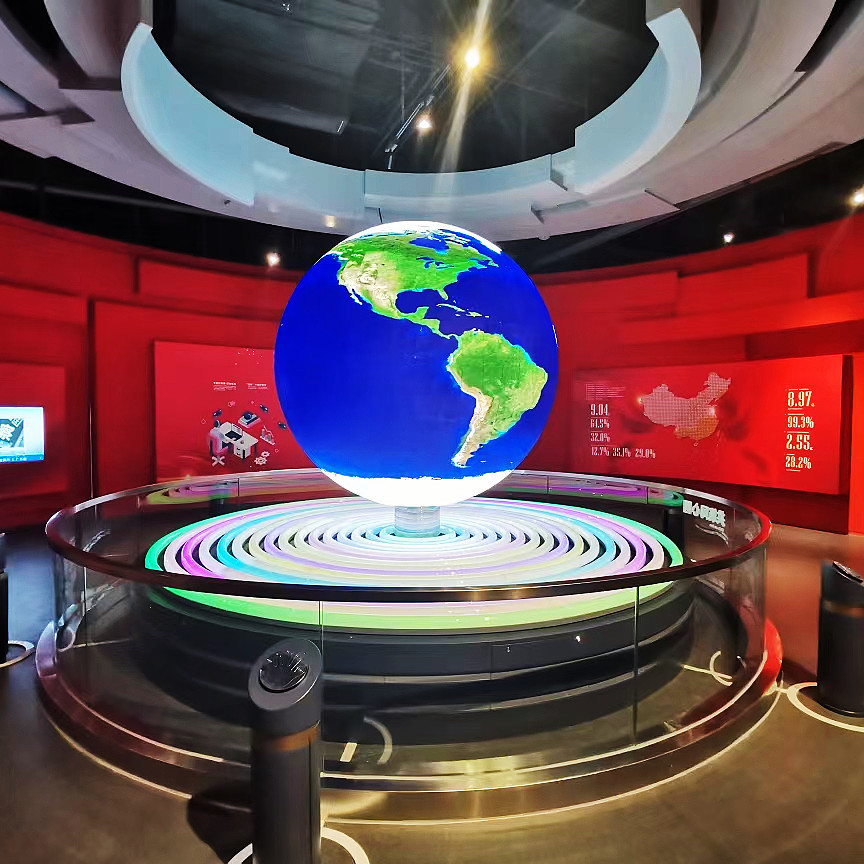
Museums and exhibitions are moving beyond static panels and traditional signs to create more engaging visitor experiences. Digital displays allow curators to present artwork, historical footage, educational content, and exhibition information in dynamic formats, helping visitors explore collections and understand complex stories. Among these options, an LED museum display can support large-scale visuals and creative installations tailored to different exhibition spaces.
However, choosing a suitable display requires more than considering image quality. Museums must account for viewing distance, ambient light, artifact protection, available space, and architectural restrictions. These factors influence which display technology will work best in a particular environment.
This article compares the main LED display options for museums and exhibitions, explores their applications in different settings, and explains how to evaluate technical requirements, alternative display technologies, and project costs before making a decision.
1. What Are the Best LED Display Options?
There is no single best museum LED screen for every exhibition. The right choice depends on the content, viewing environment, available space, and installation requirements. The main options differ in structure, viewing experience, and flexibility.
LED Display Type | Best Use |
Fine-pitch LED video wall | High-detail visual presentations |
Transparent LED display | Glass installations with preserved sightlines |
Flexible LED screen | Curved walls and creative shapes |
Digital LED poster | Entrance information and temporary exhibits |
Interactive LED display | Educational engagement |
Circle LED sign | Circular artistic installations |
These options can be adapted to different exhibition goals. Outdoor LED displays may suit open-air exhibitions, while rental screens can support temporary events that require frequent setup and dismantling. The following sections explore how each type fits specific museum settings.
2. Best LED Displays for Different Settings
An exhibition LED display should match the purpose, layout, and visitor experience of each space. Different formats offer different advantages.
Main Galleries
Fine-pitch LED video walls present detailed artwork, historical footage, and digital art. Pixel pitch, viewing distance, color reproduction, and screen size affect image clarity. Immersive displays suit large visual experiences, while standard screens may be enough for simpler content.
Artifact Displays
Transparent LED displays add digital information while preserving views through glass. Check content visibility, brightness, mounting structure, and artifact conservation requirements before installation.
Creative Spaces
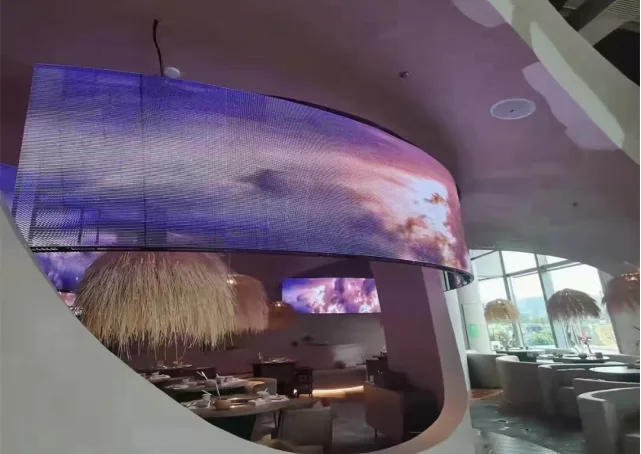
Flexible LED screens fit curved walls and columns, while circle LED signs create distinctive visual features. Shape, content design, and viewing angles guide the choice.
Entrances and Temporary Exhibitions
Digital LED posters present schedules, directions, and exhibition announcements. Portable or rental screens can suit changing displays and temporary events.
Interactive Learning
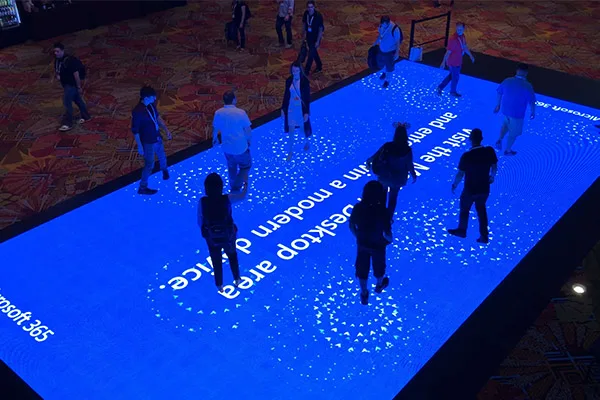
Interactive LED walls and floor displays can support educational activities. Software integration, durability, visitor movement, and safety need assessment. Interactivity depends on the complete system, not the screen alone.
3. Choosing the Right LED Display
Selecting an LED art gallery display requires balancing visual performance with conservation, installation, and operational needs. Use this checklist to assess the space before choosing equipment.
Key Factor | What to Check |
Viewing distance | Pixel pitch, image detail, text readability, and viewing angles |
Lighting and artifacts | Ambient light, adjustable brightness, reflections, heat, noise, and conservation requirements |
Space and mounting | Wall load, available space, ventilation, cabling, and maintenance access |
Content and control | Playback scheduling, multilingual content, synchronization, software compatibility, and interactivity |
Historic buildings may restrict structural changes, making mounting methods and maintenance access especially important. Fixed, portable, or custom-shaped installations should be evaluated against the site's limitations.
Before purchasing, confirm that the display and control system meet the museum's actual requirements. Include installation, software integration, ongoing maintenance, and artifact protection in the assessment.

4. LED vs. Other Display Technologies
An immersive LED display can create large, seamless visual areas, but projectors and LCD video walls may be better suited to certain museum environments. Compare their main characteristics before deciding.
Factor | LED Display | Projector | LCD Video Wall |
Image | No conventional panel bezels | Depends on surface and lighting | Visible panel seams |
Installation | Flat, curved, or custom layouts | Needs projection distance and surface | Usually flat, regular layouts |
Best fit | Large visuals and creative installations | Projection-based or temporary exhibits | Information and rectangular displays |
Key considerations | Pixel pitch, power, and maintenance | Ambient light, shadows, and focus | Seams, layout, and viewing angles |
The best option depends on exhibition goals, available space, lighting, and budget. Consider the full installation requirements alongside image quality. Compare supplier quotations and maintenance plans using consistent specifications, rather than assuming one technology always costs less or lasts longer than another.
5. Planning Your Display Project
5.1 Estimate Total Costs
Planning a museum LED project requires more than comparing screen prices. A digital LED poster display may suit entrance information, while transparent, flexible, or circular screens may require different mounting and integration work.
Include these costs in your budget:
Screen size, pixel pitch, and display configuration
Mounting structures, controllers, and installation
Shipping, maintenance, and spare parts
5.2 Evaluate Suppliers
Choose a supplier that can meet your display and installation requirements. Before committing, review:
Technical specifications and system compatibility
Customization and integration capabilities
Warranty, maintenance, and after-sales support
Relevant project references, where available
Compare quotations based on equivalent configurations and the full project scope. This helps identify practical solutions that fit the exhibition space, operational needs, and budget.
Conclusion
Choosing the right LED display for a museum or exhibition depends on the content, space, and visitor experience. Fine-pitch LED video walls suit detailed visuals, transparent displays preserve sightlines, flexible screens support creative shapes, and digital LED posters present visitor information. Before making a decision, consider viewing distance, artifact protection, architectural restrictions, content requirements, and the total project budget to ensure the display meets the venue's needs.
HSC LED specializes in creative LED displays, including digital LED posters, flexible LED screens, circle LED signs, and tailored display solutions. Contact HSC LED to discuss your museum or exhibition requirements and explore a customized solution for your space and project goals.