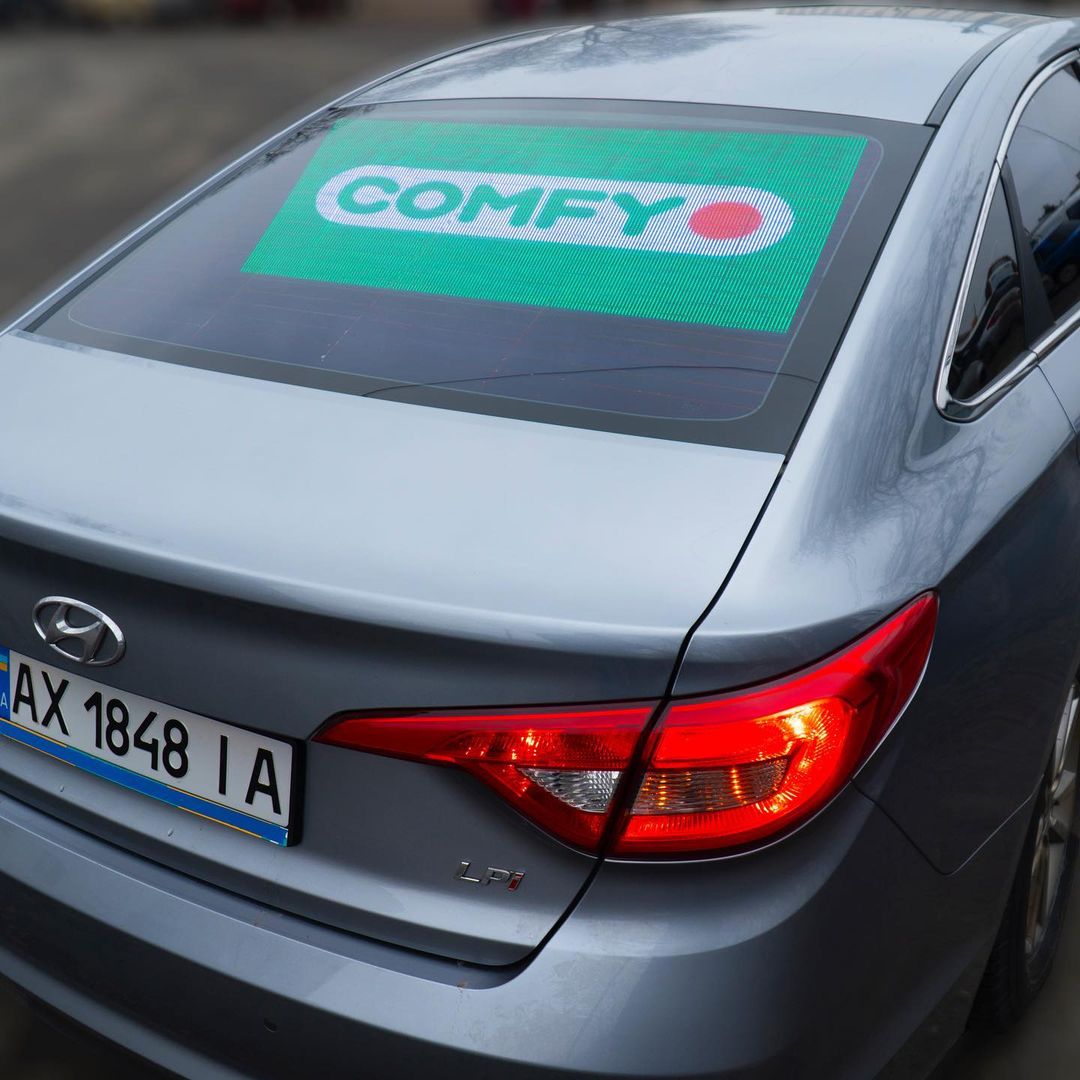
From the striking displays in shopping mall storefronts to giant screens in sports stadiums and creative installations at concerts, LED displays have become a familiar part of modern visual communication. Their bright images and flexible designs make them suitable for everything from advertising and events to retail and entertainment.
But what is actually inside an LED screen? A display may look like a single seamless panel, yet it contains many components working together to produce clear and vivid images. Understanding how these parts connect and function is essential when choosing, installing, or maintaining an LED display.
In this guide, we will break down an LED screen from the inside out, starting with the LED modules and moving through the cabinet, control system, power supply, cooling components, and other supporting structures. By the end, you will have a clearer understanding of how an LED display is built and how its key components work together.
1. What Is an LED Screen?
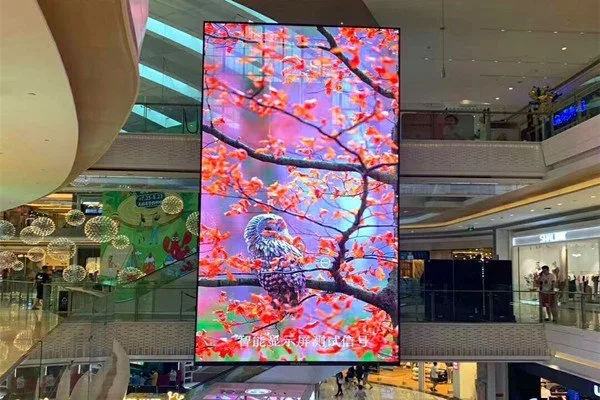
An LED screen is a flat-panel display that uses light-emitting diodes (LEDs) as its light source. These tiny diodes are arranged in a grid and emit light when powered, working together to create images, videos, text, and other visual content.
Key Advantages
LED displays are widely used because they offer several practical benefits:
High brightness for clear visibility in different lighting conditions
Low power consumption compared with many traditional display technologies
Thin and durable designs for flexible installation options
Vivid colors for engaging and high-impact visual content
Indoor vs. Outdoor LED Displays
Indoor LED displays typically use higher pixel density for close viewing, while outdoor LED displays prioritize higher brightness and protection against water and dust for clear visibility at longer distances.
2. LED Display Module Components
An LED module is the basic display unit of an LED screen. Although compact, it combines several components that handle electrical connection, light emission, signal control, and physical protection.
Component | Main Function | Key Details |
PCB | Provides electrical connections | Usually fiberglass or aluminum-based |
LEDs | Produce light and images | RGB LEDs create full-color displays |
Drive ICs | Control brightness and color | Convert control signals into precise electrical signals |
Plastic Protection Cover | Protects internal components | Outdoor versions need stronger water and UV resistance |
The PCB forms the electrical foundation of the module, connecting the LEDs, driver ICs, and other components. Its material must withstand operating heat and mechanical stress.
LEDs are the light-emitting elements that create the displayed image. Common SMD options include SMD1010, SMD1515, SMD2121, SMD1415, SMD1921, SMD2525, and SMD3535.
Drive ICs receive signals from the control system and regulate the LEDs precisely. Common models include ICN2038S, ICN2153, FM6124, FM2153, MBI5124, and MBI5153.
The plastic protection cover helps protect the module from dust, moisture, and physical damage while providing insulation.
3. The Framework: LED Display Cabinet
An LED cabinet integrates the display, power, control, and thermal systems into one structural unit. Each component plays a different role in maintaining stable and reliable display performance.
Component | Key Function |
LED Modules | Form the visible display surface; pixel pitch affects resolution and viewing clarity. |
Cabinet Frame | Provides structural support and protection; common materials include steel, aluminum, die-cast aluminum, magnesium alloy, and carbon fiber. |
Power Supply | Converts AC power into stable DC power and may use redundancy for improved reliability. |
Control System | Sending and receiving cards process and distribute display signals. |
Cables | Carry power and data between modules and internal components. |
Cooling Fans | Help regulate cabinet temperature and prevent heat buildup. |
Together, these components form a complete cabinet that can be assembled into larger LED displays.
4. LED Display Cabinet Types
LED cabinets vary in design to meet different installation, maintenance, and application requirements. The main classifications include:
By Application
Indoor cabinets are designed for controlled environments and typically support fine-pitch displays for malls, meeting rooms, and control rooms. Outdoor cabinets are built for higher brightness and weather resistance in billboards and stadiums.
By Maintenance
Front-service cabinets: Allow components to be accessed from the front, ideal for wall-mounted displays or limited rear space.
Rear-service cabinets: Require access behind the screen and suit large fixed installations.
By Material
Common options include steel, aluminum, die-cast aluminum, magnesium alloy, and carbon fiber, each offering different balances of strength, weight, and thermal performance.
By Structure
Standard cabinets support efficient large-scale assembly, while custom cabinets accommodate curved or irregular display structures.
By Installation
Fixed cabinets are intended for permanent installations, while rental cabinets are designed for frequent assembly, dismantling, and transportation.
5. Special LED Display Types
Beyond standard LED displays, specialized designs offer greater flexibility for demanding environments and creative installations.
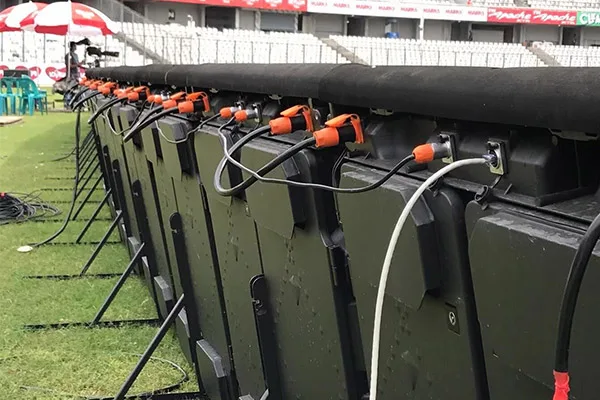
Sports Perimeter LED Display
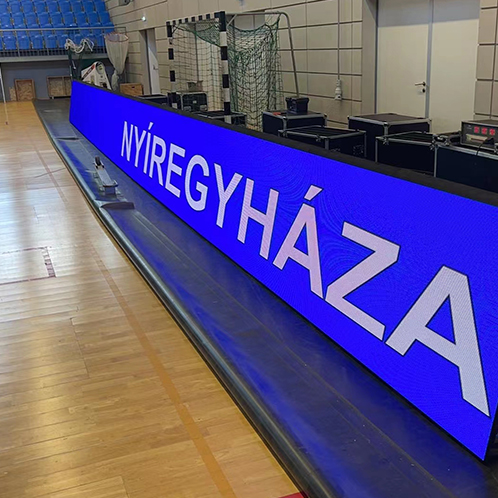
Designed for sports venues, sports perimeter LED displays combine:
Soft protective masks and cushioning structures to reduce impact risks.
Adjustable angled supports for suitable viewing by spectators and cameras.
Water, dust, and UV resistance for outdoor conditions.
Transparent LED Display
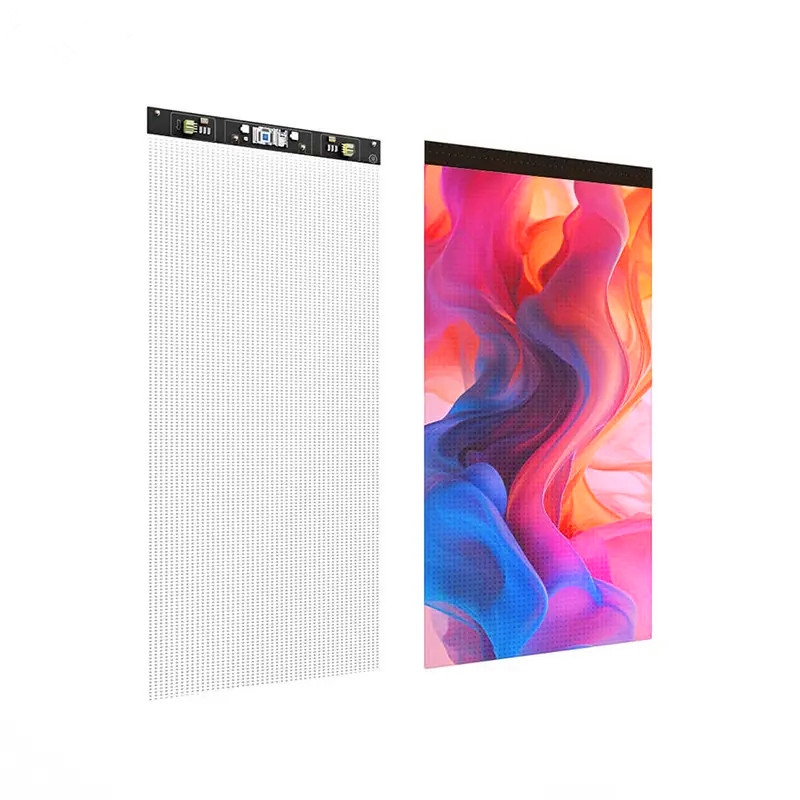
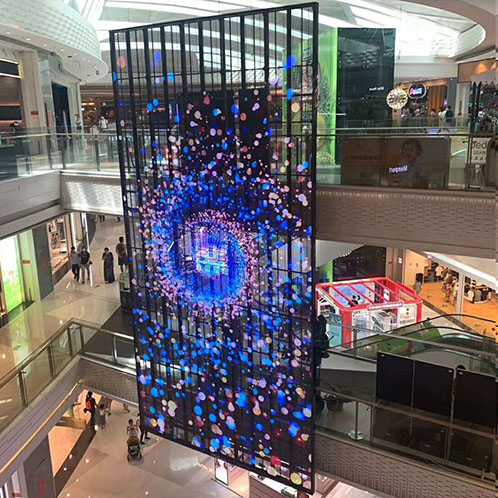
Transparent LED displays allow light and background scenery to remain visible through the screen. Their lightweight, frameless or mesh-style construction makes them suitable for glass facades, storefronts, and stages.
Poster LED Display
Poster displays provide a compact, ready-to-use solution with:
Slim, mobile designs with wheels for easy movement.
Wi-Fi, USB, and cloud control for convenient content updates.
Seamless splicing when multiple units are combined into a larger display.
Vehicle-Mounted LED Display
Vehicle-mounted LED displays are designed for outdoor advertising, political campaigns, and live event broadcasting. They can be equipped with a built-in generator or battery pack to support mobile operation without relying on external power. A hydraulic lifting system raises the display, while 360°rotation helps maximize viewing coverage.

6. LED Display Screen Structure and Assembly Process
A complete LED display combines display, control, power, and structural components into one integrated system.
6.1 LED Display Screen Structure
Component | Function |
LED Display Panel | Forms the main visual surface from multiple LED modules. |
LED Display Controller | Processes input signals and sends display data to the panel. |
Video Processor | Adjusts image quality and supports signal scaling and switching when required. |
Content Source | Provides display content through computers, media players, or other devices. |
Installation Bracket | Supports and secures the LED display. |
Power Distribution System | Distributes power to the display components for stable operation. |
6.2 LED Display Assembly Process
The main assembly process includes frame preparation, LED module installation, cable connection, control system installation, power integration, and final testing. Each step requires accurate alignment and secure connections to ensure consistent image quality and reliable operation.
Conclusion
An LED display is a precise and complex system in which every component matters. From LED modules, PCBs, and driver ICs to cabinet frames, control systems, power distribution, and cooling, these elements work together to determine the screen's performance, reliability, and visual quality. Understanding the structure and assembly process makes it easier to select the right display for different applications.
For businesses seeking more than a standard LED screen, HSC LED provides creative and customized display solutions, including flexible, spherical, circular, and other special-shaped LED displays. With a complete supply chain, cost-effective products, front-service aluminum LED displays, and solutions for exhibitions, events, airports, hotels, and shopping malls, HSC LED can support diverse project needs. Contact us today to find the perfect LED structure solution for your next project!