NewsSite EditorSite/uploads/image/68931a3c33409.pngThe following guide explains how to choose the right flexible LED display in a clear and practical way.
How to Choose the Right Flexible LED Display for Your Project
Views: 611Author: Site EditorPublish Time: 2026-02-25Origin: Site
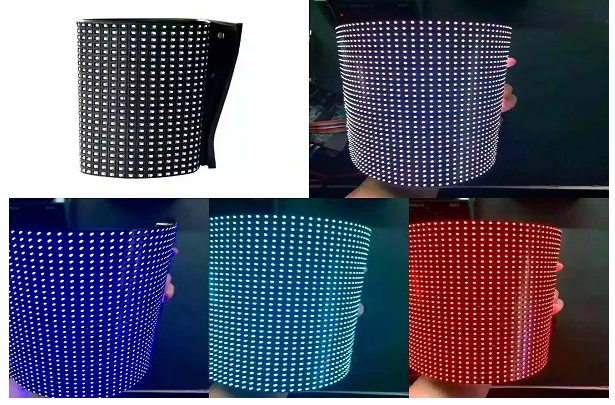
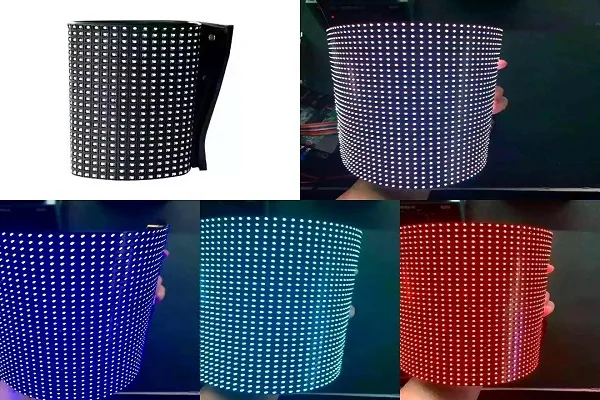
When planning a modern visual project, selecting the right flexible LED display is a critical step. Compared with traditional rigid panels, a flexible LED screen can bend, curve, and adapt to irregular surfaces. This makes it widely used in curved walls, cylindrical columns, stage backgrounds, retail interiors, and architectural facades.
However, not all flexible LED solutions are the same. Different projects require different specifications in terms of size, pixel pitch, brightness, structure, and control systems. Therefore, understanding the key technical factors will help you avoid installation problems, image distortion, or unnecessary costs. The following guide explains how to choose the right flexible LED display in a clear and practical way.
Step 1: Define the Installation Environment for Your Flexible LED Display
Before comparing specifications, you should first define where and how the flexible LED display will be installed.
Indoor or Outdoor Application
To begin with, the installation environment directly affects brightness and protection level. An indoor flexible LED display usually requires moderate brightness, since lighting conditions are stable. In contrast, an outdoor flexible LED screen must provide higher brightness to remain visible under daylight.
At the same time, IP rating is important. For indoor use, IP20 is commonly sufficient. For outdoor projects, IP65 is typically required to protect against dust and water. Clearly defining indoor or outdoor usage will narrow down your options quickly.
Surface Type and Curvature
In addition, the type of surface plays a major role. Is the screen going on a curved wall, cylindrical column, wave-shaped ceiling, or irregular facade? Each structure has a different bending radius requirement.
A professional flexible LED module should support smooth bending without damaging internal circuits. Therefore, always confirm the minimum bending radius and structural support method before finalizing your selection.
Step 2: Determine the Right Size and Shape
After defining the environment, the next step is to determine screen size and geometry.
Screen Size and Viewing Area
First, calculate the viewing area and audience distance. A screen that is too small may not deliver strong visual impact. On the other hand, an oversized display increases cost and may complicate installation. Matching the display size with the physical space ensures both visual balance and budget control.
Shape Customization Capability
Furthermore, flexible LED displays are often chosen for their shape adaptability. Common shapes include cylindrical wraps, concave or convex curves, and S-shaped designs. However, not all manufacturers can provide complex customization.
For this reason, it is important to verify whether the flexible LED display manufacturer can deliver the required structure while maintaining stable performance and seamless splicing.
Step 3: Select the Proper Pixel Pitch for Your Flexible LED Display
Another key technical factor is pixel pitch. Pixel pitch refers to the distance between two adjacent LED pixels, measured in millimeters.
Matching Pixel Pitch to Viewing Distance
Generally speaking, smaller pixel pitch means higher resolution and clearer images at close viewing distances. For example:
P2.5 is suitable for viewing distances of about 2.5 meters or more
P4 is suitable for viewing distances of about 4 meters or more
Therefore, when selecting a high resolution flexible LED display, always consider how far viewers will stand from the screen. Choosing an unnecessarily small pixel pitch will increase cost without adding practical benefit.
Step 4: Evaluate Brightness, Viewing Angle, and Refresh Rate
In addition to resolution, visual performance depends on brightness, viewing angle, and refresh rate.
Brightness and Viewing Angle
To ensure clear images, brightness must match the environment. Indoor displays typically use lower brightness than outdoor installations. Meanwhile, a wide viewing angle—often 140° or more—allows audiences to see consistent images from different positions. This is especially important for curved LED walls installed in public spaces.
Refresh Rate for Smooth Performance
Moreover, refresh rate affects image stability. A higher refresh rate, such as 1920Hz or above, reduces flickering and improves camera performance during filming or live broadcasting. For projects involving video recording, selecting a high refresh rate LED display is highly recommended.
Step 5: Consider Structural Design and Thickness
Besides image quality, structural design is equally important.
Thickness and Weight
A thinner and lighter flexible LED display is easier to transport and install. Lightweight panels reduce structural load and simplify mounting. However, the design must still maintain durability and long-term reliability.
Installation Methods
Flexible LED displays support various installation methods, including magnetic front service mounting, adhesive attachment, suspension systems, and embedded structures. Choosing the correct installation method will improve efficiency and reduce maintenance difficulty.
Step 6: Check Heat Dissipation and Long-Term Stability
Because LED screens operate continuously for long hours, heat dissipation must be considered.
Some flexible LED displays use natural heat dissipation through optimized structural design. Others may use assisted cooling systems. Effective heat management ensures stable performance and extends the lifespan of internal components.
Therefore, when comparing options, always evaluate the cooling design and material quality of the flexible LED display.
Step 7: Review Control System and Compatibility
Finally, do not overlook the control system. A reliable LED display control system ensures stable signal transmission and synchronized playback.
Check whether the display supports common video processors, input formats, and software integration. For complex projects, compatibility with media servers or centralized control systems may also be required. A well-matched control solution guarantees smooth operation in daily use.
Conclusion: Choose the Right Flexible LED Display for Long-Term Success
In summary, choosing the right flexible LED display requires careful evaluation of environment, size, pixel pitch, brightness, structure, cooling, and control system. Each factor plays an important role in overall performance and project success.
Instead of focusing only on price, it is better to consider technical compatibility, customization ability, and supplier expertise. A well-selected flexible LED display not only enhances visual impact but also ensures reliable operation for years to come.
If you are looking for a professional and experienced LED display supplier, HSC LED offers customized flexible LED display solutions for curved walls, columns, stages, and architectural projects. Our team provides technical support, reliable manufacturing, and tailored designs to meet your specific requirements.
Contact HSC LED, your trusted LED display supplier, to discuss your next project and receive a professional solution today.